
What is part quality in manufacturing?
Part quality in manufacturing is the process of validating that a part is designed correctly, approved correctly, manufactured correctly, and monitored correctly before and after production begins. It includes pre-production approval workflows such as APQP, PPAP, and FAI, as well as in-production issue management such as non-conformance and corrective action.
For manufacturers, this is not just a quality-team issue. Part quality affects launch timing, supplier accountability, audit readiness, warranty exposure, and the ability to keep production moving.
Why part quality becomes difficult in complex manufacturing
Manufacturers need to validate parts across long BOM lifecycles, frequent revisions, multiple suppliers, and cross-functional approvals. When those workflows are managed through email, spreadsheets, and disconnected files, quality validation slows down and accountability becomes harder to maintain.

Manual quality validation slows launch readiness
Manual emails, spreadsheets, and disconnected approval steps make it harder to complete validation on time and keep launch programs on track.
Poor traceability increases risk
Without a digital history of part revisions, approvals, and communications, it becomes harder to isolate root cause, understand which customer programs are impacted, and defend decisions in audits or claims.

Non-conformances are harder to control
If production issues are captured inconsistently or outside the main workflow, teams struggle to manage corrective action, track recurrence, and connect issues back to the affected part and supplier.

What Blume Global enables in Part Quality
Blume Global gives manufacturers a connected way to manage quality preparation, part approval, non-conformance, and corrective action, while maintaining full traceability across the BOM item lifecycle.
-
APQP for launch quality planning
Manage Advanced Product Quality Planning across design, supplier collaboration, and launch readiness. APQP is broader than a single quality step. It starts from the design phase and runs until the product is approved for production, involving more than just quality and engineering. Francois describes it as a very heavy, cross-functional process that fits multiple manufacturing industries. -
Revision control and audit trail
Maintain the history of communications, approvals, modifications, and revisions so teams can see what changed, when it changed, and who approved it. This supports accountability, audits, and downstream issue analysis. -
PPAP for mass-production approval
Manage Production Part Approval Process workflows to validate parts before mass production begins. PPAP is especially important in automotive and similar mass-production environments. It is typically a long, auditable process with many phases, and Francois emphasizes that if it is rushed or poorly documented, the risk is very high. -
Non-conformance and corrective action
Manage production issues, non-conformances, deviations, and corrective action workflows such as 8D, 3D, and short-form processes like 1D where full corrective action is not required. These workflows can be initiated from ERP-connected quality events and managed collaboratively with suppliers. -
FAI for first-article validation
Support First Article Inspection workflows for industries and use cases where FAI is the better fit, such as aerospace, med device, high tech, or environments with more batch-oriented changes. FAI is lighter than PPAP, but still requires structured planning, inspection, approval, and exportable documentation. -
Part-level quality context
Because the platform is item-centric, teams can connect quality events back to the part revision, related tooling, change request, supplier, and affected program. That is one of the core differentiators that came through in the training and sales materials. -
Configurable templates, workflows, and alerts
Use configurable templates aligned to customer or industry requirements, including AIAG-style guidance where relevant, while still allowing company-specific adaptation. The platform supports role-based access, approval visibility, due dates, and alert-driven workflow management.
What manufacturers gain
Blume Global helps manufacturers manage key upstream supply chain workflows with connected capabilities that improve control, visibility, and execution
Faster quality validation
Digital processes help manufacturers move through APQP, PPAP, and FAI more consistently and with fewer manual bottlenecks.
Better launch readiness
Quality workflows stay connected to nomination, tooling, and launch timing, reducing the risk of late approvals blocking start of production.
Stronger auditability and accountability
Revision control, role-based approvals, modification history, and structured templates create a more defensible quality process.
Better control of production issues
Teams can identify risk earlier, launch corrective actions faster, and manage recurring part issues in a more structured way.
Better cross-functional reuse of quality data
Part-level quality information can support supplier scorecards, sourcing strategy, and change-related workflows instead of staying trapped in one isolated process.
Why part quality matters in direct material supply chains
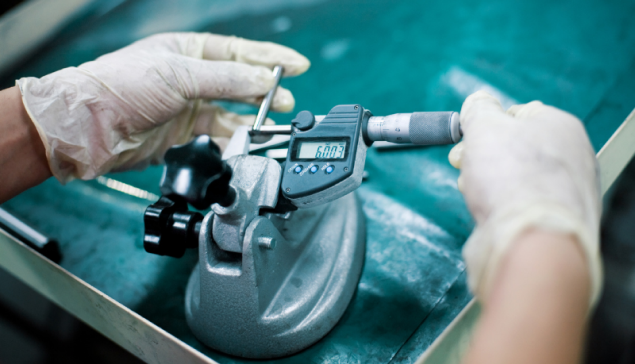
Part quality is one of the most important control points in the manufacturing lifecycle. It sits between sourcing and production, and it determines whether a manufacturer can move into launch and mass production with confidence. If quality validation is slow, incomplete, or poorly documented, the impact can extend far beyond one supplier or one part. It can affect launch timing, production continuity, customer programs, warranty cost, and audit exposure.
The materials also make another point clearly: quality performance should not sit in isolation. It should feed supplier scorecards and sourcing decisions, helping teams avoid propagating poor-quality suppliers into future business.
Supplier Management works best when connected to adjacent workflows
Supplier Management is one part of a broader manufacturing supply chain solution. The same supplier information can support:



Product Launch & Order Collaboration
For execution, schedules, ASNs, and shipment preparation

Logistics Execution
For shipment execution, booking workflows, and transport coordination

Real-Time Visibility
For milestone tracking, proactive alerts, and control tower response
contact us
Get in Touch
Fill out the form, and our solution experts will reach out to guide you on your journey toward achieving supply chain excellence.